What the internet optimizes
Performance- Make life instantly legible
- Flatten feeling into proof
- Reward what can be displayed
Observed, not explained
A memory operating system for ordinary life.
People document more than ever. They preserve less meaningfully than ever. Build Something turns scattered residue into authored memory.
Early document of a future memory institution
The first proof is emotional accuracy. The second is continuity. The third is economic durability. Together they show a system taking shape.
Core Insight
What the internet optimizes
PerformanceWhat people keep needing
ContinuityWhat Build Something does
Memory infrastructureDivider 01
They finally stopped asking for snacks.
The emotional unit is not spectacle. It is the moment after the noise stops.
What This Actually Is
The first expression is cinematic because memory is rarely understood as data. Underneath the surface is a system that turns fragments into coherent emotional artifacts people can keep, revisit, and eventually pass on.
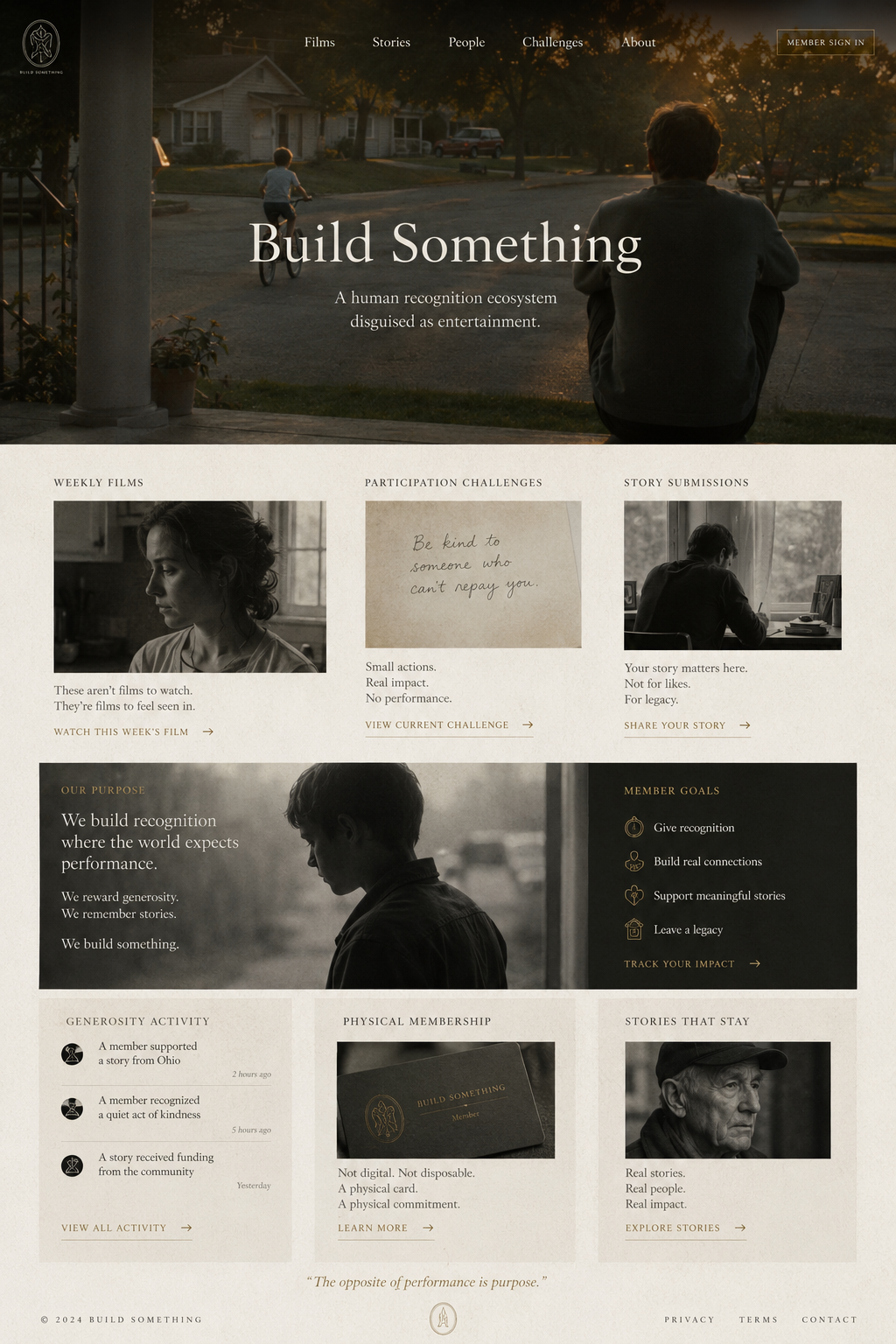
Early surface
Editorial, cinematic, quiet. The surface feels like an archive before it feels like software.
Emotional accuracy
Ordinary life is treated with care instead of spectacle.No wellness language. No therapeutic overreach. Just precise recognition of the routines people usually understand only after they are gone.
Archival credibility
The material already exists. The meaning is missing.Photos, videos, voice notes, texts, location history, objects, routines, and overlooked moments become legible without becoming performance.
Economic credibility
Durability comes from emotional switching costs.People return because the system holds something no generic feed can reconstruct: the shape of their life over time.
Institutional direction
Culture becomes the delivery mechanism for an archive layer.The audience only needs to feel the edge of that now. The larger institution becomes obvious later.
Divider 02
Another Thursday.
Recognition begins where routine has flattened itself into invisibility.
Dad-Scaped
Not a parody campaign. Not grooming satire. A controlled world built to test whether people recognize themselves when everyday life is observed with cinematic seriousness.
The films
Short cinematic pieces that recognize the texture of overlooked life.The films establish the emotional tone: lightly humorous, precise, recognizable, and careful enough to avoid sentimentality.
The cards
One to keep. One to give away.The object system makes recognition portable. One card becomes a keepsake. The other becomes a way of noticing someone else.
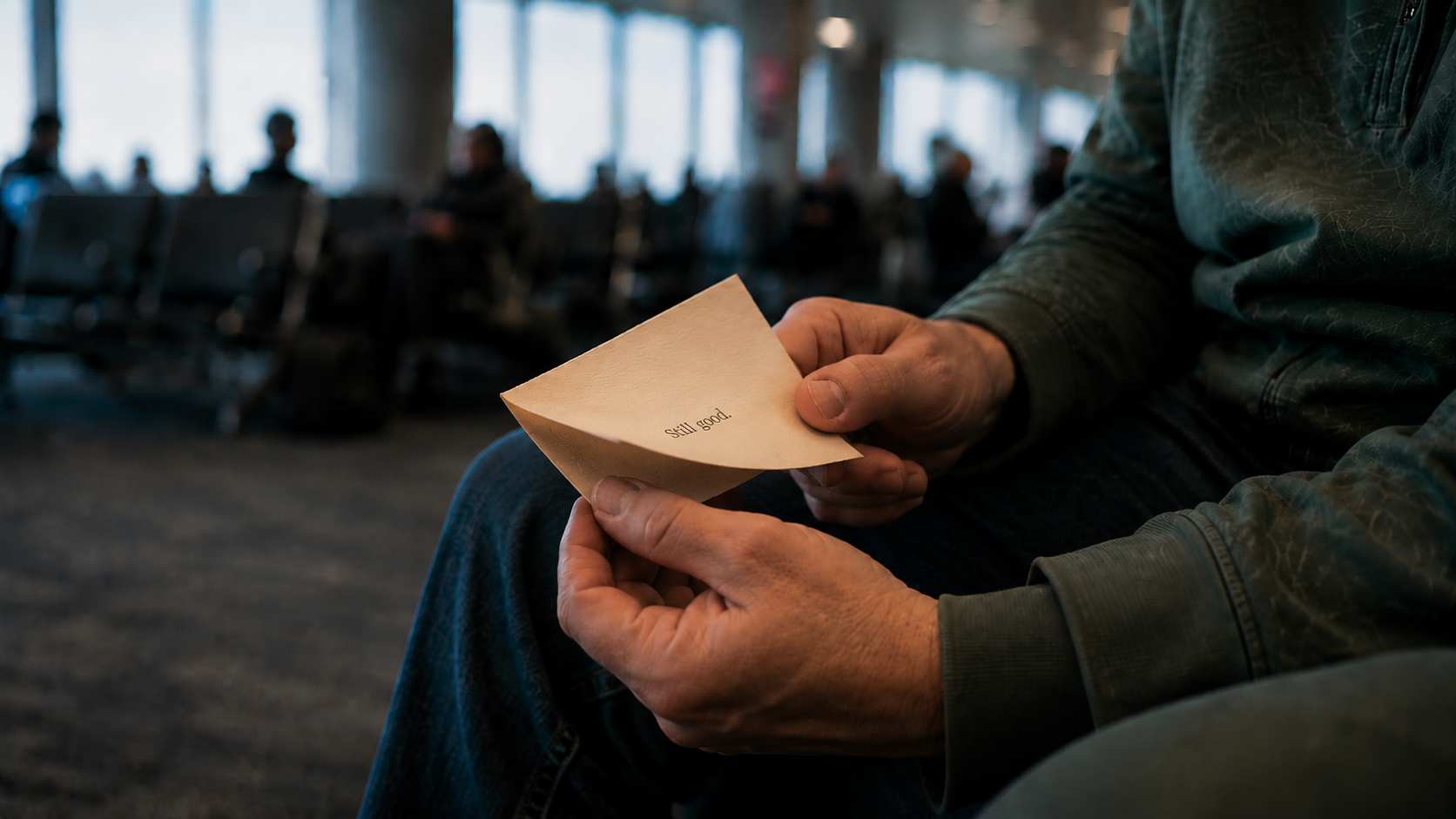
Observation
Observation becomes ritual.First to Find Five, member submissions, story prompts, and black card mythology ask people to notice more carefully without breaking the atmosphere.
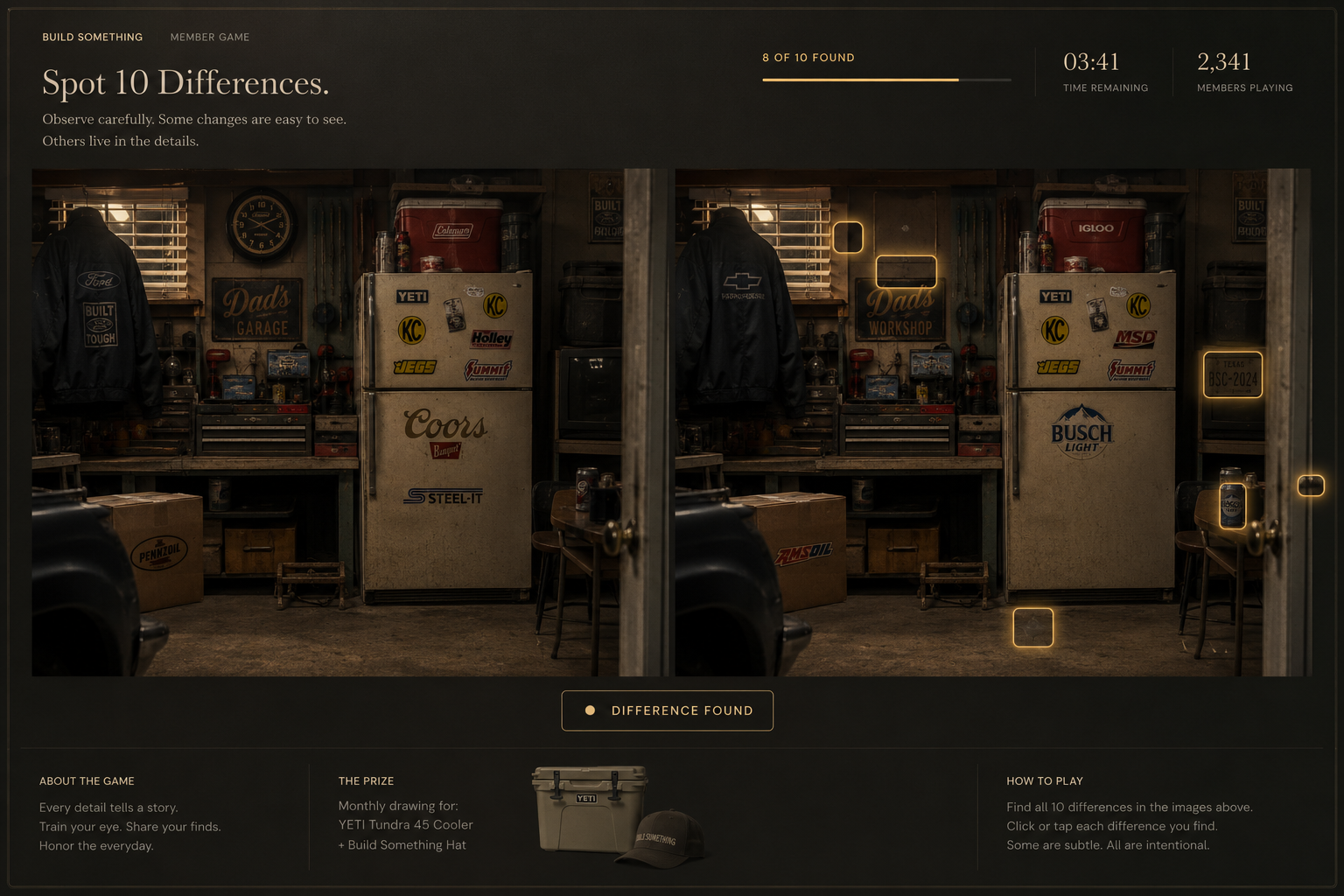
Why it matters
Dad-Scaped proves that recognition can become an artifact.What it proves
This world can hold commercial layers without collapsing tone.System proof
The concept already has credible archival surfaces.These are not abstract wireframes. They show a calm editorial home, a weekly film destination, observational rituals, a daily Build surface, and a member record capable of holding long-term continuity.
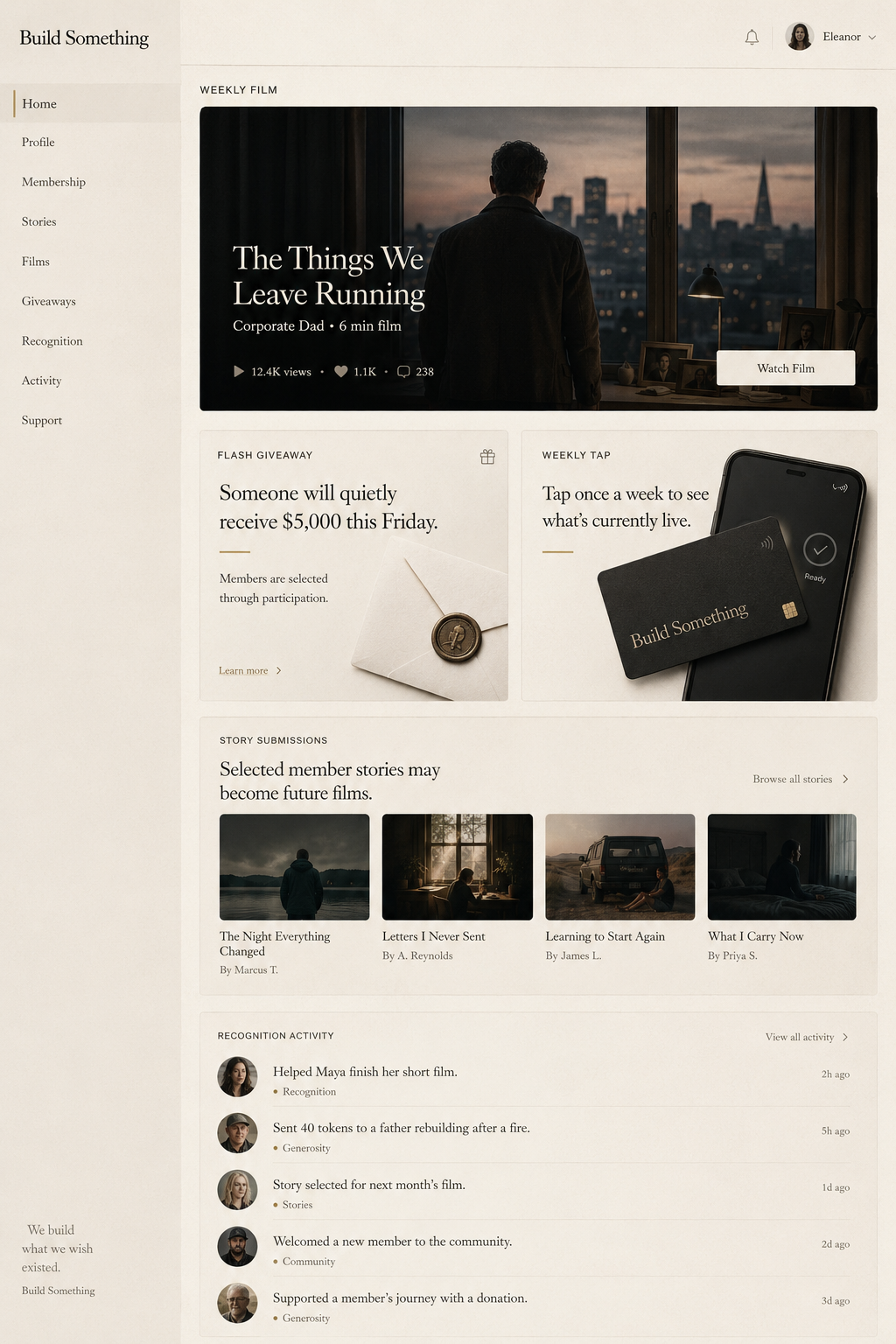
Editorial home
A believable front door for films, Builds, objects, and member records.The surface reads like culture first, which is what keeps the system from feeling extractive.
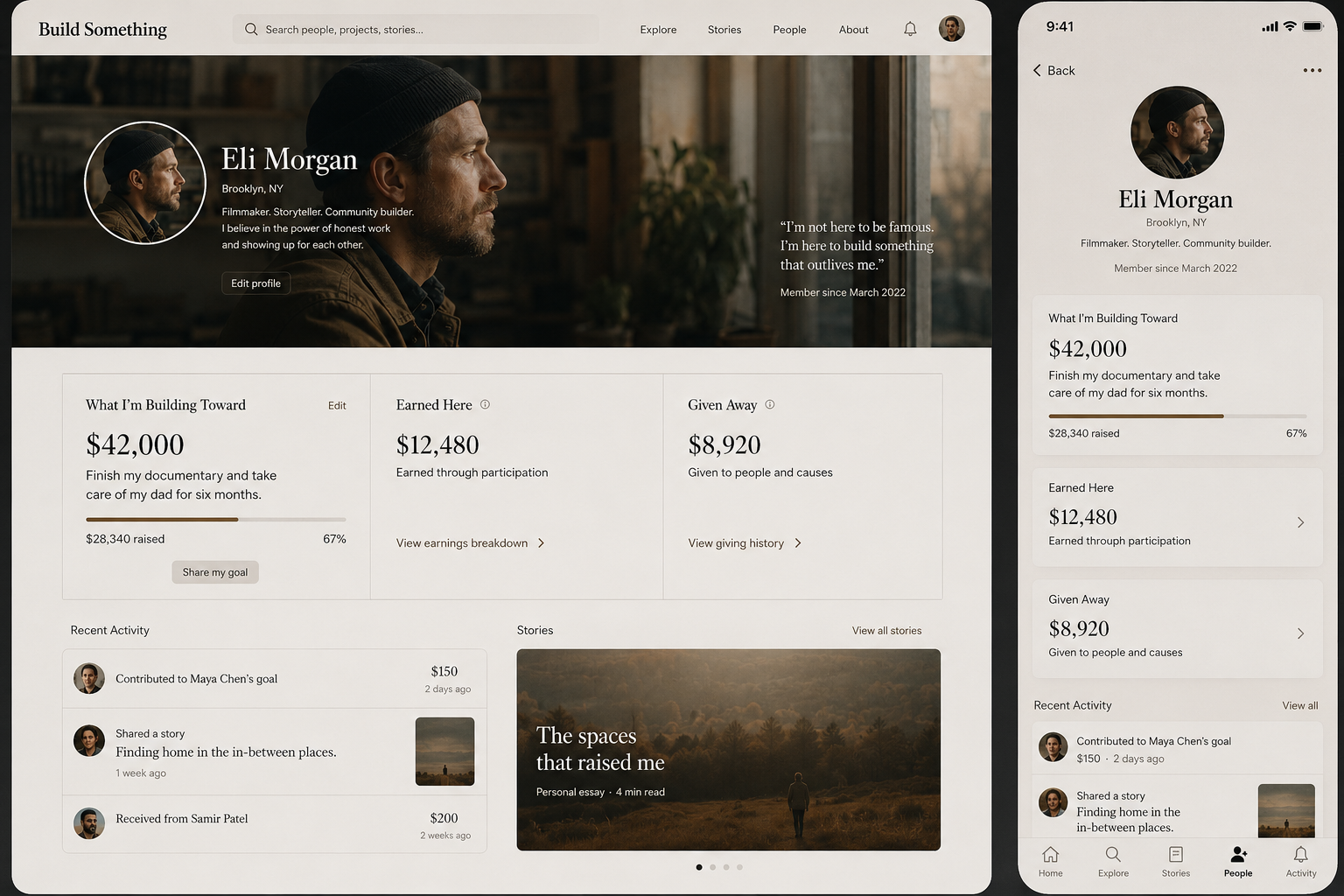
Identity layer
Profiles make memory, generosity, and story participation legible without turning life into a scoreboard.This is the first evidence that the system can hold continuity, not just activity.
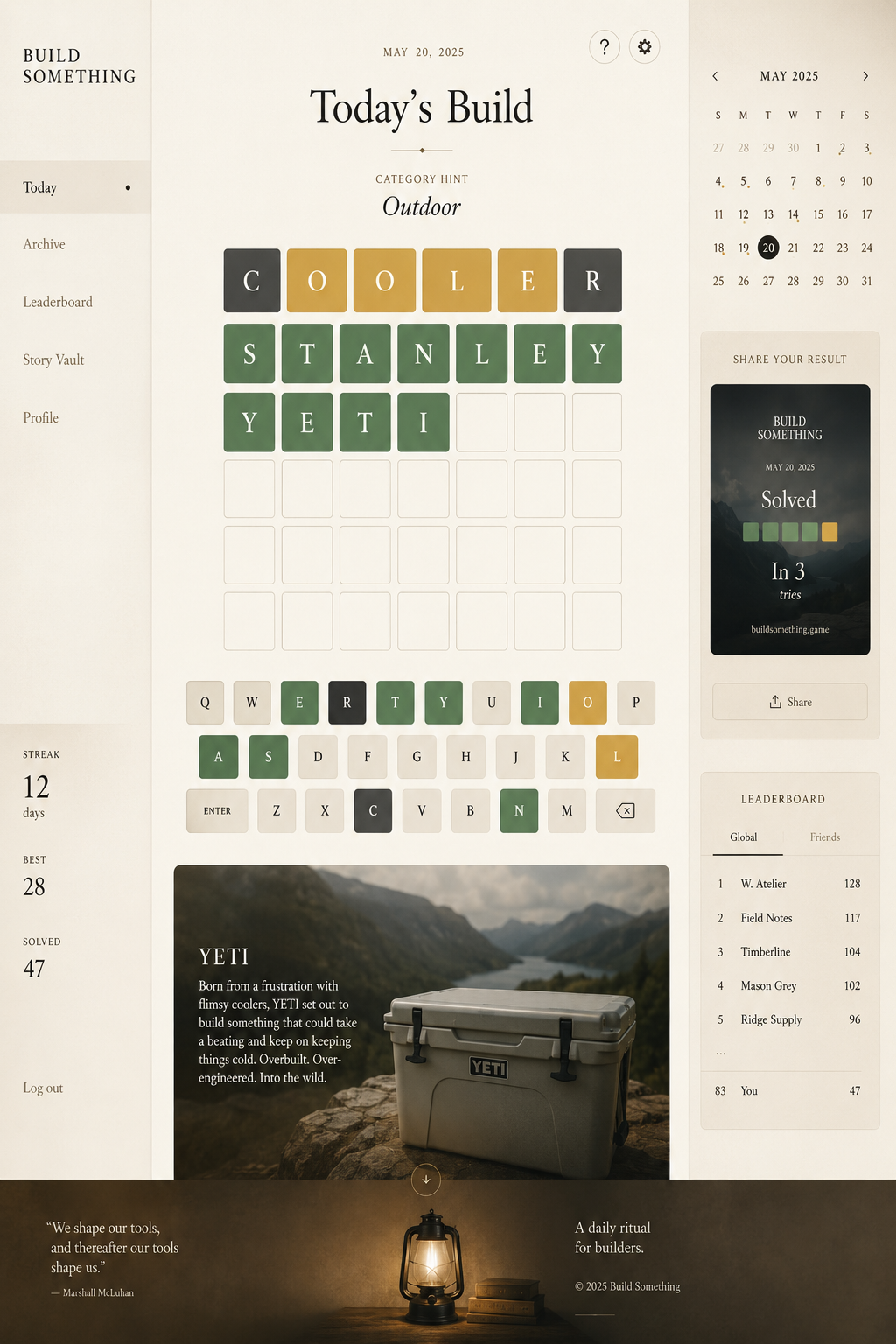
Daily ritual
A small daily surface that turns brands and objects into things worth noticing.The behavior is light, habitual, and observational.
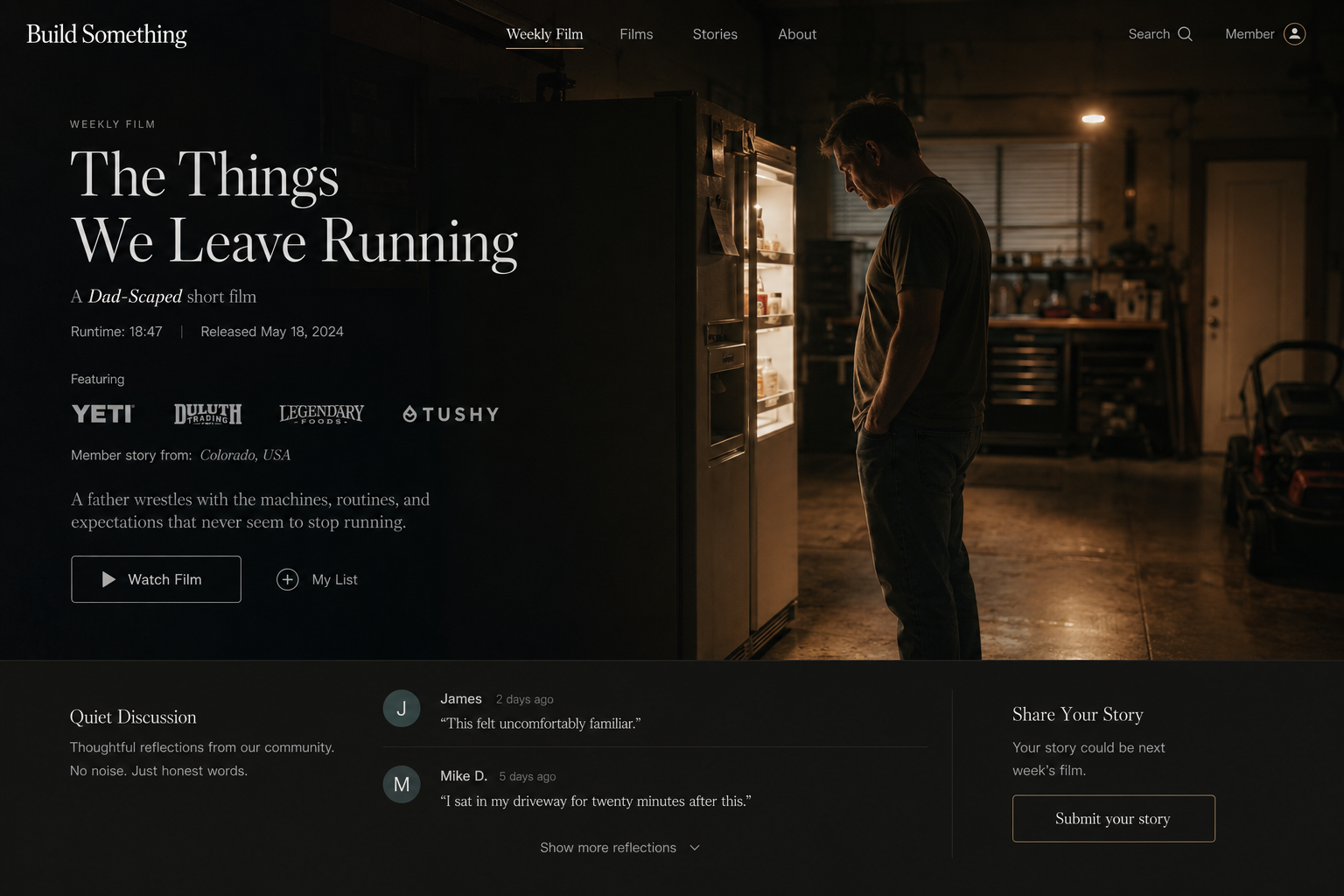
Film destination
The cinematic layer can stand on its own as a place people genuinely want to spend time.That matters because the emotional tone sets permission for everything else.
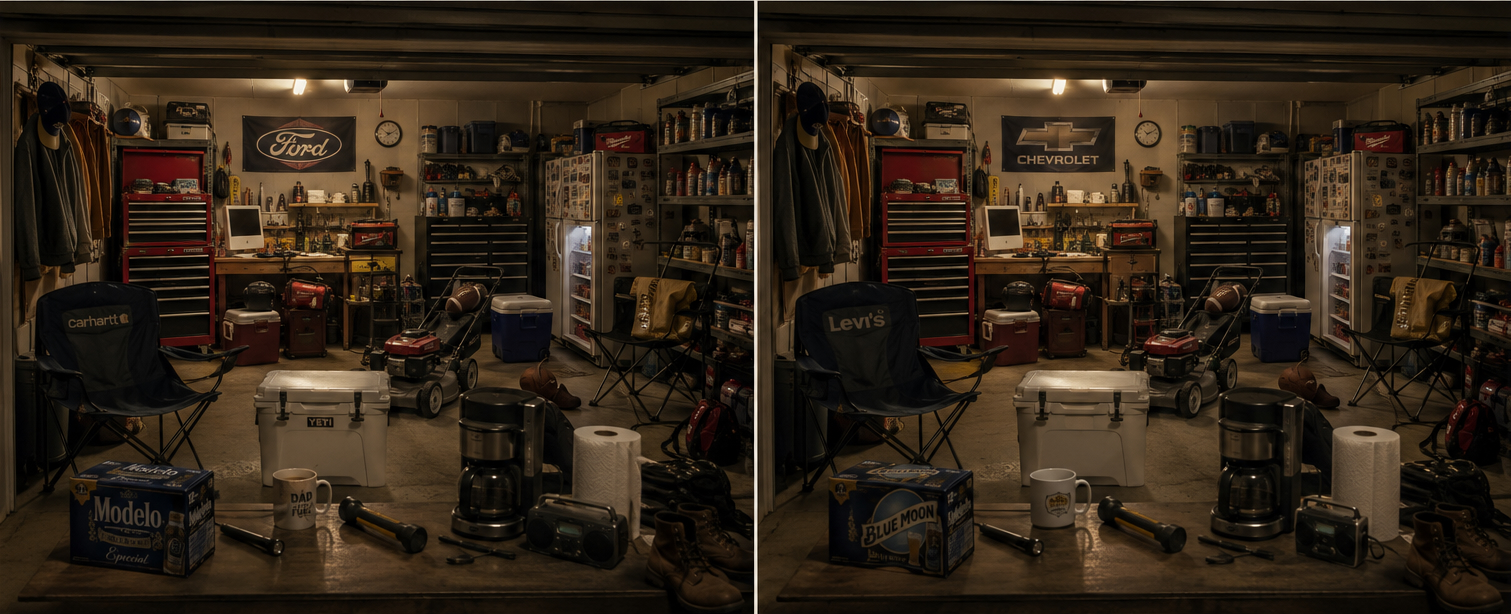
Member observation
Small rituals deepen attention without breaking the atmosphere.Observation becomes participation, and participation becomes part of the record.
Divider 03
Everything stayed running.
The point is not the object. It is the continuity the object quietly holds.
Continuity Layer
Build Something profiles make continuity legible without turning life into a scoreboard. The design principle is simple: everything that accumulates should feel archival, not gamified.
Member profile
Each person gains a durable record inside the system.Continuity becomes visible enough to keep.
Quiet proof
A profile is not a vanity page. It is a quiet record of what the system has learned to recognize.
Divider 04
3:14AM.
Some forms of care deserve something better than disappearance.
The Story Engine
Members can opt in and grant permission to work with the traces they already leave behind: photos, videos, voice notes, texts, calendars, location history, objects, routines, and overlooked moments. The outcome is authored memory, not generated content.
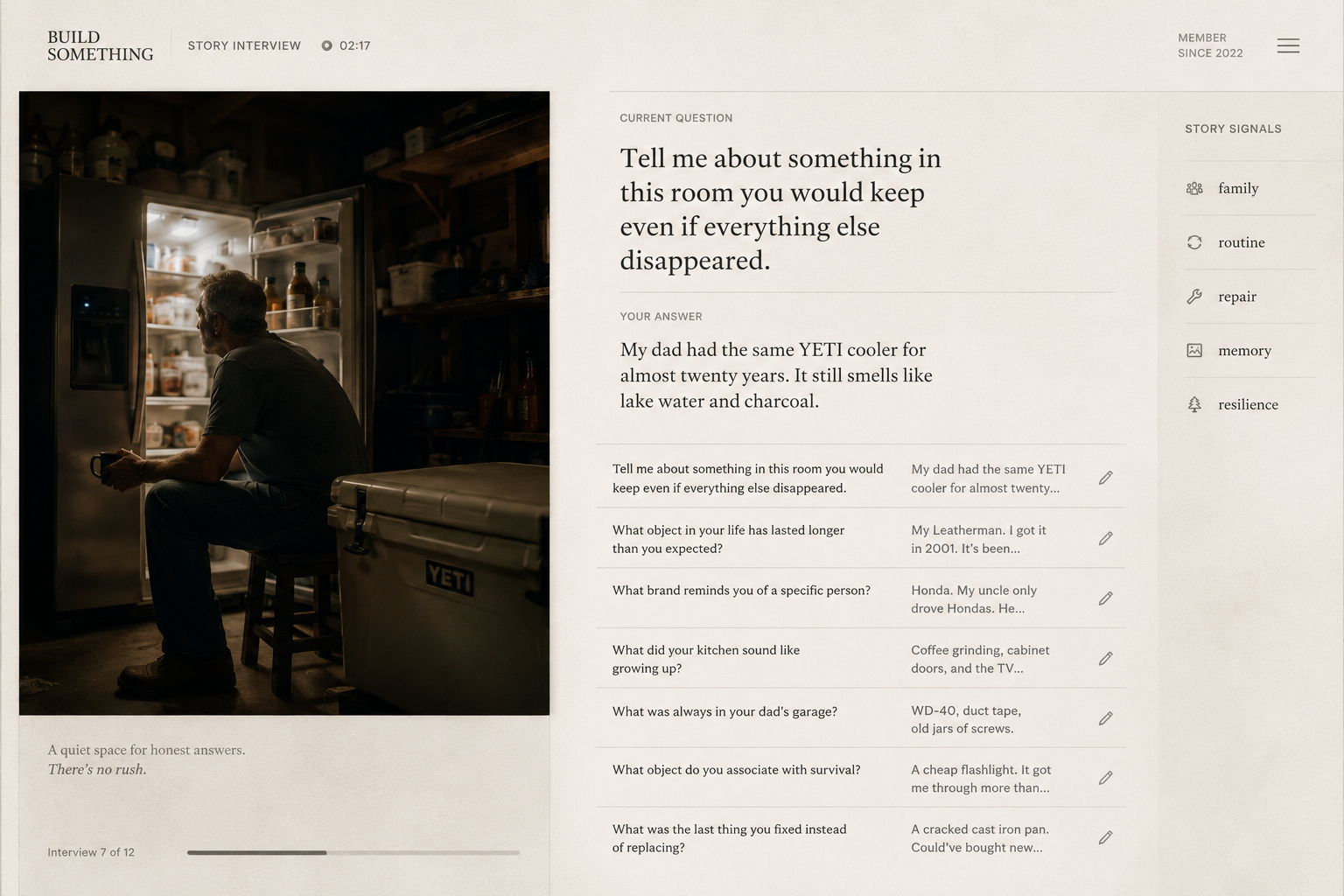
Investigative intake
The system asks with restraint, identifies what carries emotional continuity, and returns structure, tone, and authorship.
What comes back
Builds: coherent emotional artifacts made from real life.This is not surveillance, extraction, or automated nostalgia. It is a system for locating the meaning already present in what someone has lived.
Memory shift
In a world where infinite content can be generated instantly, the scarce resource becomes meaning.
Build Something is built around discernment: what to notice, what to preserve, what to leave alone, and how to give ordinary life enough form to survive time.
Divider 05
The yard finally got quiet.
Build Something is designed for the pauses after ordinary days, when nothing happens and everything is still there.
Legacy
Build Something is not preserving milestones. It is preserving emotional continuity: the driveway after work, airport carpeting, folding laundry at night, takeout in motel rooms, a parent half-listening while cooking dinner. Less digital immortality. More accurate evidence that someone was here.
What accumulates
Builds, stories, cards, objects, routines, recommendations, memory trails.Members build a layered record made of authored memory, repeated rituals, and what they chose to pass forward.
What transfers
Memory can be kept, inherited, or directed.Builds, physical artifacts, accumulated generosity, and funds can move to other people as part of the system’s long-term cultural logic.
Quietly enormous
The larger implication is simple: if ordinary life can be remembered accurately, it changes what people believe is worth noticing while they are still living it.
Divider 06
Gate B15.
A culture can be measured by what it bothers to notice.
Business Model
This deck does not need fantasy scale. It only needs to show why the system can become economically durable. The answer is that memory creates continuity, and continuity deepens every other revenue layer.
The moat
People stay because their continuity accumulates here.Builds, stories, objects, family records, giving history, and recognition do not reset every time a trend changes. That creates emotional switching costs with commercial consequences.
Memory creates continuity. Continuity creates durable revenue.
Revenue layers
Revenue layers
Divider 07
Before anyone else woke up.
Economic life and emotional life are usually discussed apart. The archive will not experience them that way.

Behind the Build
Powered by cutting-edge AI. Overseen by human judgment. Guided by audience participation.
I serve as the human guide, overseeing every decision, while our audience votes on major choices so we grow together.
Listen to “Behind the Build” as the story unfolds.
The Big Idea
For now, this deck only needs to demonstrate the first bridge: from moving films and objects to a believable system that helps people recognize, preserve, and revisit what would otherwise disappear.
What the audience should feel
This begins small. The system keeps widening.Not because the language becomes louder, but because the logic keeps widening: film to object, object to Build, Build to profile, profile to archive, archive to legacy.
What stays restrained
No giant numbers. No grandiose claims. No futurist language.Only enough scale is implied for the audience to sense a future institution taking shape in its earliest, most emotionally credible form.
Divider 08
Some things deserve to be carried.
A culture survives by deciding what should not disappear.
Ending
We’re building something slower.
Build Something starts with films, cards, stories, and Builds. It becomes something larger: a system that helps people recognize what would otherwise disappear, and gives ordinary life a form durable enough to keep.